


From Civil Rights to Community Ownership: The History of Community Land Trusts in America

As the State College Community Land Trust (SCCLT) celebrates 30 years of creating permanently affordable homeownership opportunities, it is worth remembering that the community land trust movement began not as a housing strategy, but as a civil rights strategy.
The roots of community land trusts (CLTs) are deeply intertwined with the struggle for racial justice, voting rights, economic opportunity, and land ownership in the United States. Today, more than 300 CLTs operate nationwide, helping families achieve affordable homeownership and build wealth. Yet the movement began with a simple but powerful idea: true freedom requires access to land.
Why Land Matters
For generations, Black Americans understood that freedom without economic security was incomplete. Following emancipation, many formerly enslaved people sought land ownership as a pathway to independence and self-determination.


One of the most enduring symbols of Reconstruction was the promise of "40 acres and a mule." While that promise was largely unfulfilled, Black Americans nevertheless acquired significant farmland in the decades that followed. By 1910, Black Americans owned approximately 15 million acres of farmland.
Over the twentieth century, however, discriminatory lending, violence, unequal access to government programs, heirs' property challenges, and systemic racism contributed to the loss of more than 90 percent of Black-owned agricultural land.
Civil rights leaders increasingly recognized that political rights alone could not guarantee economic security.
As Rev. Charles Sherrod later observed:
"All power comes from the land."
That understanding would become the foundation of the community land trust movement.
The Civil Rights Movement and the Birth of a New Idea
The origins of community land trusts can be traced to the Civil Rights Movement of the 1960s.
In southwest Georgia, organizers with the Student Nonviolent Coordinating Committee (SNCC) worked to register Black voters and challenge segregation. Among them were Charles Sherrod, Shirley Sherrod, Slater King, and fellow SNCC leaders such as John Lewis.

Their work revealed a difficult reality.
Many Black sharecroppers and tenant farmers who registered to vote were evicted from the land they farmed in retaliation for exercising their constitutional rights. Families who challenged injustice often faced economic punishment.
Civil rights leaders began asking an important question:
How can people exercise freedom if they do not control the land beneath their feet?
The answer would become one of the most innovative community development models in American history.
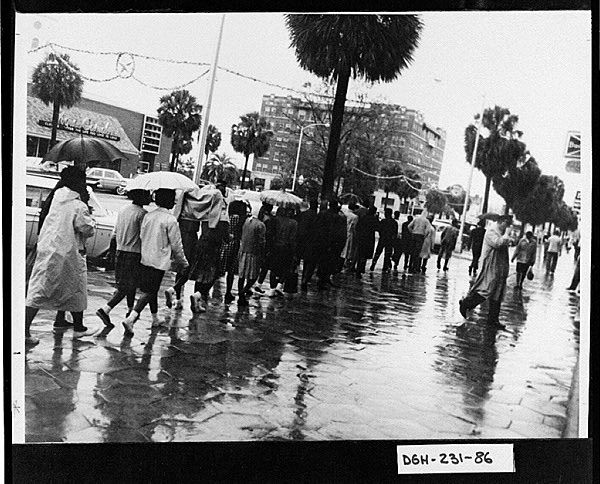
1969: New Communities Creates the First Community Land Trust

In 1969, civil rights leaders Charles Sherrod, Shirley Sherrod, and Slater King joined with social activist Robert Swann and others to establish New Communities, Inc. near Albany, Georgia.
Encompassing approximately 5,700 acres, New Communities became one of the largest African American-owned landholdings in the United States at the time and is widely recognized as the first community land trust in America.
The organization sought to:
Protect Black farmers from displacement
Build economic independence
Promote collective stewardship of land
Preserve opportunity for future generations
New Communities was founded on a revolutionary principle:
The community would own the land, while individuals could own homes, farm, and build wealth upon it.
This approach separated land from speculation and ensured that the benefits of ownership could be shared across generations.
1972: The Modern CLT Model Is Formalized
Inspired by the experience of New Communities, Robert Swann, Shimon Gottschalk, Erick Hansch, and Edward Webster published The Community Land Trust: A Guide to a New Model for Land Tenure in America.
The publication formalized the principles that continue to define CLTs today:
Community ownership of land
Long-term ground leases
Permanent affordability
Resident participation in governance
Stewardship for future generations
The community land trust was envisioned not only as a housing model but as a tool for economic democracy, racial justice, and community empowerment.
As CLT historian John Emmeus Davis later wrote:
"The community land trust was forged in the Civil Rights struggle in the American South."
Early Urban Community Land Trusts
While New Communities began as an agricultural initiative, the model eventually expanded into urban neighborhoods.

One of the earliest urban examples was the Community Land Cooperative of Cincinnati, established in the early 1980s. The organization demonstrated how community ownership could help address neighborhood disinvestment, housing instability, and the loss of affordable housing in cities.
The success of these early efforts helped prove that CLTs could be adapted to a variety of communities and housing markets.
Burlington, Vermont and the Rise of a National Model
Another major milestone occurred in Burlington, Vermont.
During the 1980s, Mayor Bernie Sanders championed innovative approaches to affordable housing and community development. Working with residents, housing advocates, and local leaders, Burlington helped establish the Burlington Community Land Trust.
The organization became one of the nation's most successful examples of shared-equity homeownership and demonstrated how municipalities could partner with communities to preserve affordability permanently.
In 2006, the Burlington Community Land Trust evolved into the Champlain Housing Trust, now widely recognized as the largest community land trust in the United States.
Today, Champlain Housing Trust serves thousands of households and remains a national model for affordable homeownership and community stewardship.
The Dudley Street Neighborhood Initiative

Another landmark moment came in Boston.
In the 1980s, residents of the Dudley Street neighborhood organized to address decades of disinvestment, vacant lots, and displacement. Their efforts led to the creation of the Dudley Street Neighborhood Initiative (DSNI) and one of the nation's most influential urban community land trusts.
DSNI demonstrated how residents could gain meaningful control over neighborhood development and shape the future of their communities.
Its success inspired similar efforts across the country.
A Growing National Movement
Throughout the 1990s and 2000s, community land trusts expanded across the United States.
CLTs emerged in rural communities, small towns, suburbs, and major cities. Organizations adapted the model to provide:
Affordable homeownership
Affordable rental housing
Community gardens and urban agriculture
Commercial spaces for local businesses
Anti-displacement strategies
Community wealth-building opportunities
The movement was supported by practitioners, researchers, and advocates including:
Charles Sherrod
Shirley Sherrod
Robert Swann
John Emmeus Davis
Chuck Matthei
Marge Swann
Together, they helped transform a local experiment in Georgia into a national movement.
Grounded Solutions Network and the Modern CLT Movement
As the movement grew, organizations sought ways to share knowledge and strengthen collaboration.
In 2016, the National Community Land Trust Network merged with the Cornerstone Partnership to form Grounded Solutions Network, now the leading national organization supporting community land trusts and shared-equity homeownership programs.
Grounded Solutions provides:
Research and policy advocacy
Technical assistance
Training and education
National networking opportunities
Resources for emerging CLTs
Today, Grounded Solutions helps support hundreds of organizations working to preserve affordability and expand equitable homeownership opportunities.
1996–Today: The State College Community Land Trust
In 1996, the State College Community Land Trust (SCCLT) became part of this growing national movement.
For 30 years, SCCLT has worked to create and steward permanently affordable, energy-efficient homes in the State College community.
Today, SCCLT stewards 58 permanently affordable homes and continues to expand opportunities for low-, moderate-, and middle-income households through innovative shared-equity homeownership programs.
While the housing challenges facing Centre County may differ from those that inspired New Communities in 1969, the principle remains the same:
Land should serve people, not speculation.
By preserving affordability for future generations, SCCLT carries forward a legacy rooted in the Civil Rights Movement and the belief that everyone deserves the opportunity to put down roots and build a stable future.
Timeline: Key Moments in Community Land Trust History
1865–1877 | Reconstruction
Slavery is abolished.
Black Americans pursue land ownership as a pathway to freedom and economic independence.
1910 | Peak Black Land Ownership
Black Americans own approximately 15 million acres of farmland.
1961–1965 | Civil Rights Organizing
SNCC leaders including Charles Sherrod, Shirley Sherrod, Slater King, and John Lewis organize voter registration campaigns throughout the South.
1969 | New Communities Founded
Charles Sherrod, Shirley Sherrod, Slater King, Robert Swann, and others establish New Communities, Inc., the first community land trust in the United States.
1972 | The Modern CLT Model
The Community Land Trust: A Guide to a New Model for Land Tenure in America formalizes the CLT framework.
1980–1981 | Cincinnati CLT
The Community Land Cooperative of Cincinnati becomes one of the first urban CLTs.
1984 | Burlington Community Land Trust
Burlington launches one of the nation's most influential community land trusts with support from Mayor Bernie Sanders.
1988 | Dudley Street Neighborhood Initiative
Residents in Boston establish one of the country's most influential urban community land trust efforts.
1996 | SCCLT Founded
The State College Community Land Trust begins creating permanently affordable homeownership opportunities in Centre County.
2006 | Champlain Housing Trust
Burlington Community Land Trust evolves into Champlain Housing Trust, now the largest CLT in the United States.
2016 | Grounded Solutions Network
The National Community Land Trust Network merges with the Cornerstone Partnership to create Grounded Solutions Network.
Today
More than 300 community land trusts operate nationwide, carrying forward a legacy rooted in civil rights, land justice, and community ownership.
Why This History Matters Today
Juneteenth commemorates the end of slavery in the United States, but it also invites us to reflect on what freedom means.
For the founders of New Communities, freedom meant more than legal rights. It meant having a place to live, work, build wealth, raise a family, and remain rooted in a community.
Community land trusts emerged from that vision.
As Congressman John Lewis once said:
"Freedom is not a state; it is an act."
Every permanently affordable home created through a community land trust represents an act of stewardship, opportunity, and community investment.
As SCCLT celebrates its 30th anniversary, we are proud to continue a movement that began with civil rights leaders who believed that access to land could create lasting pathways to freedom, stability, and opportunity.
Resources & Further Reading
Community Land Trust History
CLT Roots Project: https://cltroots.org
International Center for Community Land Trusts: https://www.cltweb.org
Origins and Evolution of the Community Land Trust in the United States: https://cltroots.org/wp-content/uploads/sites/3/2022/06/Origins-Evolution-CLT.pdf
New Communities
New Communities, Inc.: https://www.newcommunitiesinc.com
New Communities Case Study: https://www.cltweb.org/resources/clt-case-studies/new-communities/
National Organizations
Grounded Solutions Network: https://groundedsolutions.org
Champlain Housing Trust: https://www.getahome.org
Learn More About SCCLT
State College Community Land Trust: https://www.scclandtrust.org
This article is part of SCCLT's 30th Anniversary celebration and Juneteenth programming, honoring the people, communities, and movements that shaped the community land trust model and continue to inspire our work today.


Comments